How Weather and Time-of-Day Settings Change the Difficulty of Your Flight Challenge


Anyone who has spent time in competitive flight simulation knows that the aircraft is only part of the equation. The environment you fly in can transform a straightforward challenge into a genuine test of skill, and few factors influence that transformation more than weather and time of day settings. What looks like a simple visual option in the setup menu can completely reshape how a flight feels, how much concentration it demands, and ultimately how a pilot is scored.

Clear skies and daylight conditions are often where beginners start, and for good reason. Full visibility removes much of the guesswork from navigation and landing, allowing new pilots to focus on the fundamentals of aircraft control without the added burden of limited sightlines or unpredictable air movement. As comfort grows, however, most competitive formats begin introducing more demanding conditions, and that is where the real challenge begins.
Wind is usually the first variable to raise the difficulty level. Crosswinds during takeoff and landing force pilots to make constant small corrections, and a poorly managed gust can turn a routine approach into an unstable, penalty filled ordeal. Turbulence adds another layer of unpredictability, requiring pilots to maintain control inputs that feel almost instinctive rather than calculated, since overcorrecting often causes as many problems as ignoring the disturbance altogether.
Reduced visibility conditions, such as fog, heavy rain, or low cloud ceilings, push difficulty even further. These settings strip away the visual cues pilots typically rely on, forcing a much heavier dependence on instruments and precise procedural flying. Competitors who have only trained in clear conditions often struggle here, since flying by instruments alone requires a different kind of focus and trust in the aircraft's systems rather than the horizon outside the window.
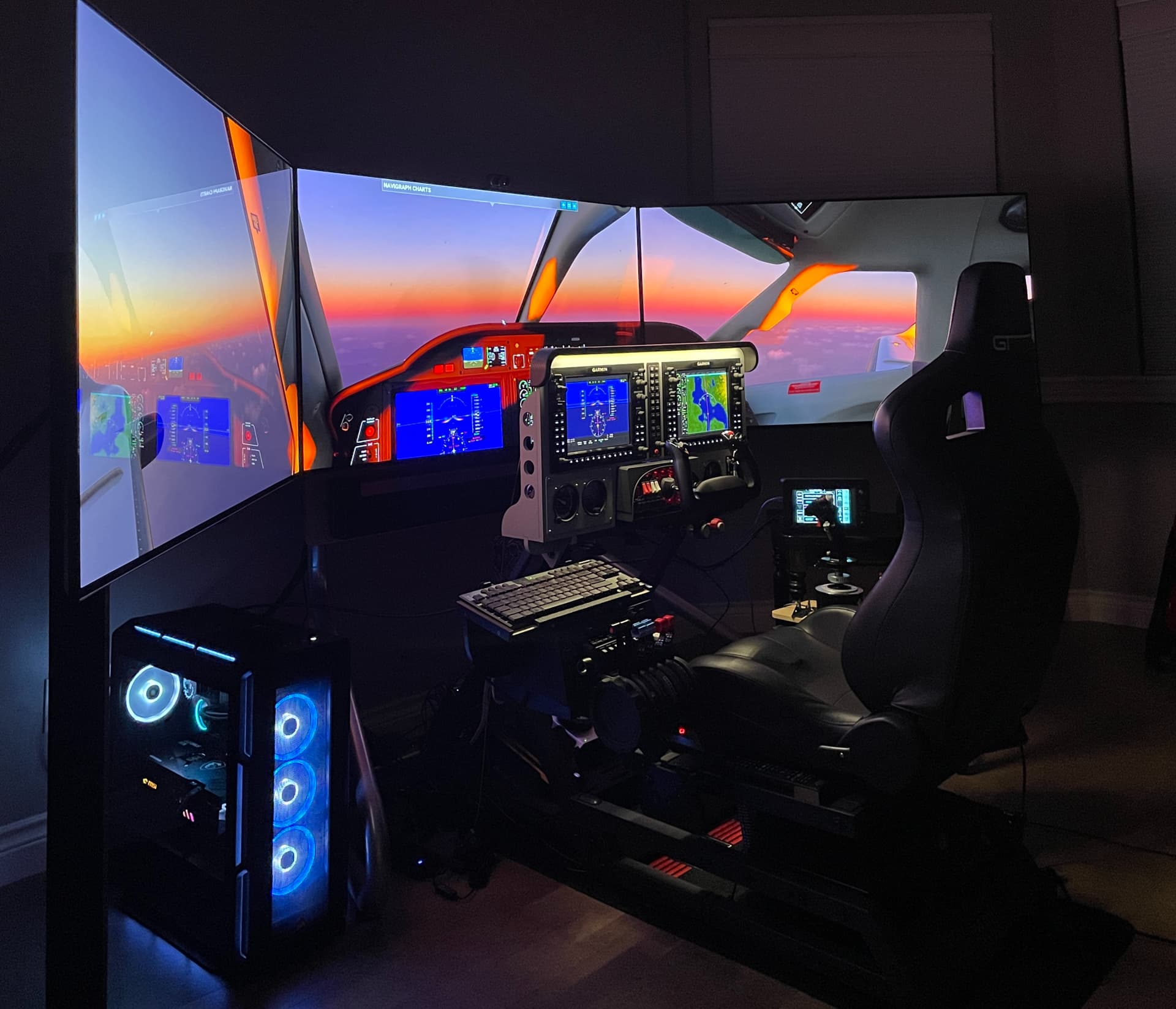
Time of day settings interact with all of these elements in ways that are easy to underestimate. Flying at night removes natural visual references almost entirely, leaving pilots reliant on runway lighting, instrument panels, and careful situational awareness. Dusk and dawn conditions introduce their own unique difficulty, since shifting light angles and long shadows can distort depth perception during critical phases like final approach. Even experienced pilots sometimes find these transitional lighting conditions more disorienting than full night flying, simply because the eyes are constantly adjusting rather than settling into one consistent state.
When weather and time of day are combined, such as a nighttime approach through gusty crosswinds and intermittent rain, the challenge compounds significantly. These layered conditions are often reserved for advanced competitive tiers, where scoring systems expect pilots to demonstrate composure and precision even as multiple variables work against them at once. Successfully managing this kind of scenario is frequently what separates skilled competitors from truly elite ones.
Understanding how these settings influence difficulty is essential for anyone preparing seriously for competition. Practicing across a wide range of weather and lighting conditions, rather than sticking to comfortable defaults, builds the adaptability that real events demand. Many competitive pilots deliberately seek out harder environmental settings during training specifically because it exposes weaknesses that clear, calm conditions never would. By treating these variables as core parts of practice rather than optional extras, pilots put themselves in a far stronger position to handle whatever conditions a competitive challenge throws their way.